


How to Choose the Right Box Style for Your Product

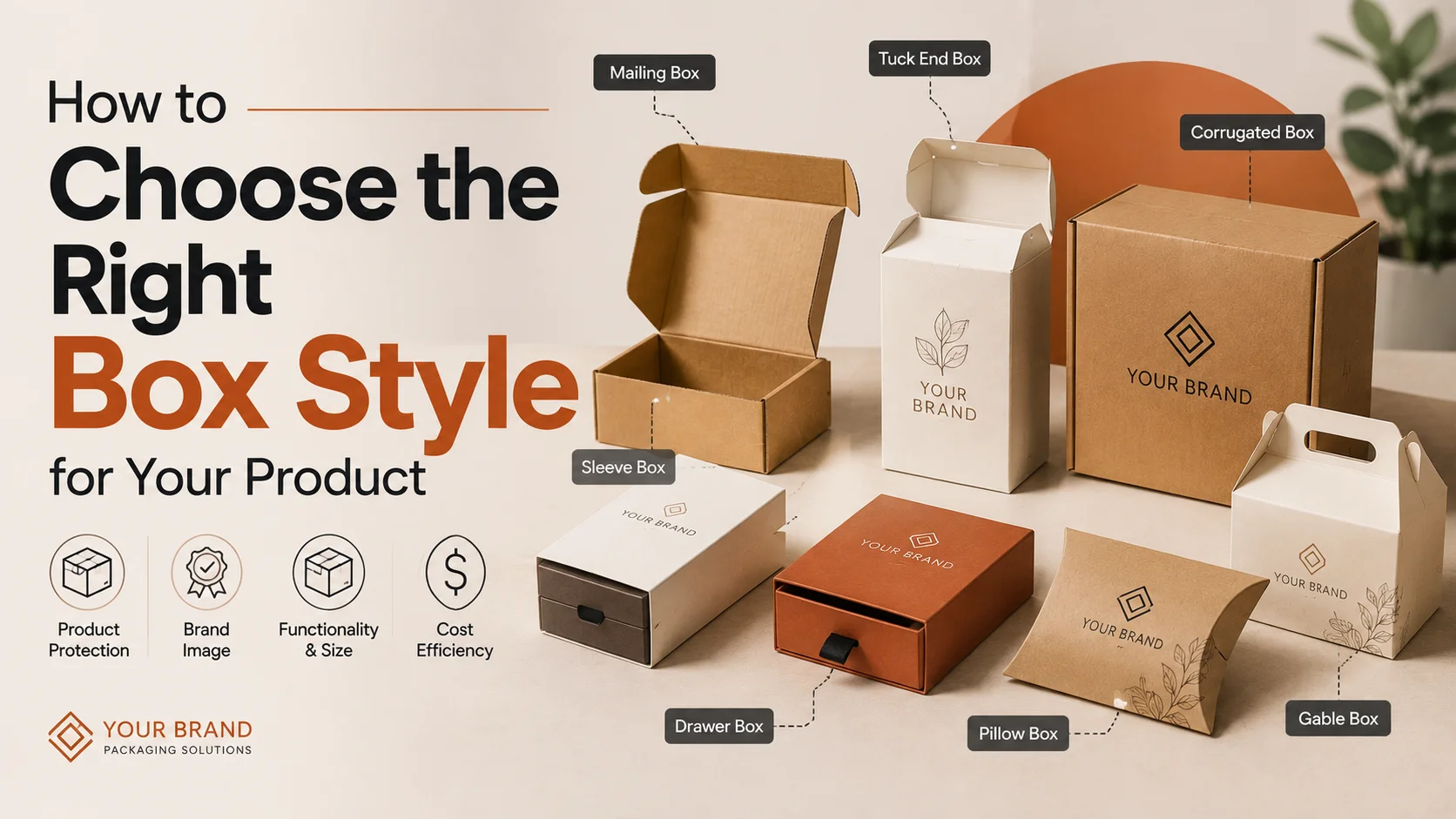
How to Choose the Right Box Style for Your Product
The box style is the shape and structure of your packaging, and it quietly decides three big things: how well your product is protected, how it feels to open, and how much it costs. Pick the right one and everything downstream gets easier. Here’s a simple way to choose, without needing a packaging degree.
Start with your product
Before you think about looks, think about what you’re actually putting in the box.
- Weight and fragility. Heavy or breakable items need sturdier structures, like auto-bottom boxes, rigid boxes, or fitted inserts. Light, durable items can use simpler cartons or mailers.
- Shape and size. Standard shapes fit standard structures. Unusual shapes may call for a custom die-line or a flexible pouch.
Where will it sell?
Your sales channel points you toward the right family of styles.
- Shipping direct to customers. For ecommerce and subscriptions, mailer boxes are the favorite. They’re protective, self-locking, and built for the unboxing moment.
- On a retail shelf. Display and window boxes help your product get noticed and picked up, while tuck-end cartons are the reliable retail workhorse.
- Gifting and premium. Rigid boxes, two-piece lid-and-base boxes, and sleeve-and-tray structures all say luxury the moment they’re handled.
A quick guide to common styles
- Tuck-end cartons. Affordable and versatile, great for cosmetics, supplements, and most retail products.
- Mailer boxes. The ecommerce and subscription standard, with a strong unboxing feel.
- Rigid boxes. Premium and protective, ideal for electronics, beauty, and gifts.
- Display and window boxes. Built for retail visibility and impulse pickup.
- Sleeve and tray. A premium feel and an easy, satisfying open, perfect for sets.
- Pouches and mylar bags. Flexible, resealable, and space-efficient, for coffee, snacks, and edibles.
Don’t forget the unboxing
If you sell direct to customers, opening the box is part of the product. A mailer with a printed interior or a rigid box with a clean reveal earns photos and shares, which is basically free marketing. Weigh that against your budget, but don’t ignore it. The moment your customer opens the box is one of the few times they’re paying full attention to your brand.
Balance protection and budget
Here’s the rule that saves money in the long run: the cheapest box that fails in transit is the most expensive box you can buy. Damaged products mean refunds, replacements, and lost trust. Match the structure to how much protection your product genuinely needs, then optimize cost from there.
Still not sure?
That’s completely normal, and it’s exactly what we’re here for. Describe your product, your channel, and your budget, and we’ll recommend the right style for free. If you want to be certain, we can prototype it so you hold the real thing before you commit to a run.


